Breed of the Year 2026: Alpaca
Alpacas are South American camelids, closely related to llamas and more distantly to camels. They have been raised by Indigenous peoples of the Andes for thousands of years, where their fibre became an important part of clothing, culture, trade and wealth. Alpacas were selectively bred for their exceptional fibre, and today they are recognized around the world as one of the great natural fibres.
Most of the world's alpacas still live in the highlands of South America, particularly Peru, Bolivia and Chile. Peru remains the world's largest producer. Alpacas are extraordinarily well adapted to the cold, dry and challenging environment of the Andes—and that adaptation is part of what makes their fibre so special.
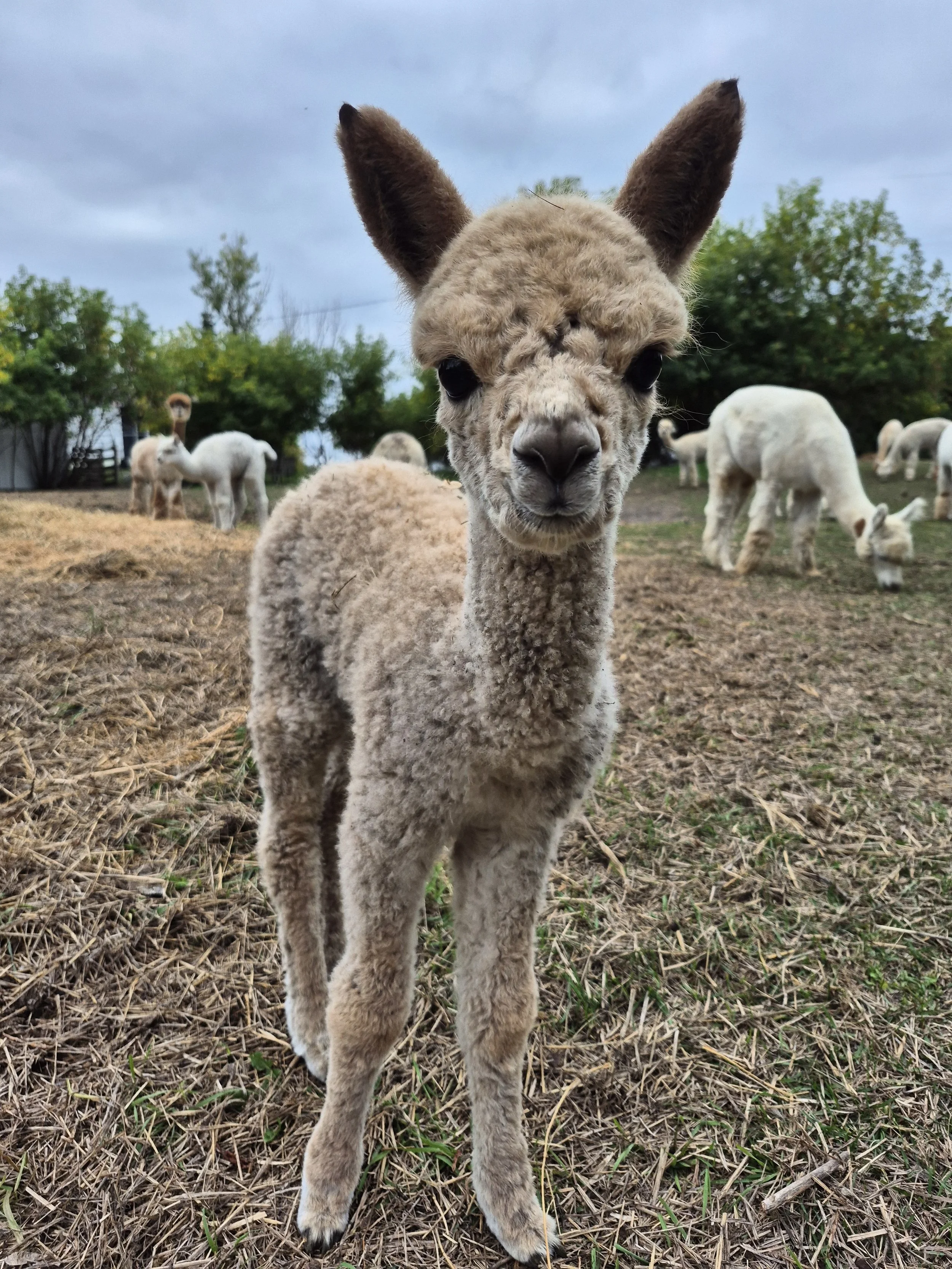
Alpaca from Fabled Forest Alpaca
Alpacas in Canada
Alpacas are relatively new to Canadian agriculture. Although a small number were already present in Canada in the 1980s, the Canadian industry really began with a major importation in 1992.
A group of Canadian breeders and investors purchased Chilean alpacas that had been quarantined in New Zealand. On January 2, 1992, 362 alpacas arrived in Canada by 747 cargo plane, with animals arriving at federal quarantine facilities in both Alberta and Quebec. They spent additional time in quarantine before being released to Canadian farms.
These animals formed the foundation of the Canadian alpaca industry. Since then, alpacas have become established across the country, producing fibre for handspinners, knitters, weavers, felters and commercial textile production.
There are two recognized types of alpaca: Huacaya and Suri.
They are the same species and have essentially the same body type and temperament. The big difference is their fibre.

HUACAYA
Huacaya is by far the more common type, making up more than 90% of the world's alpacas.
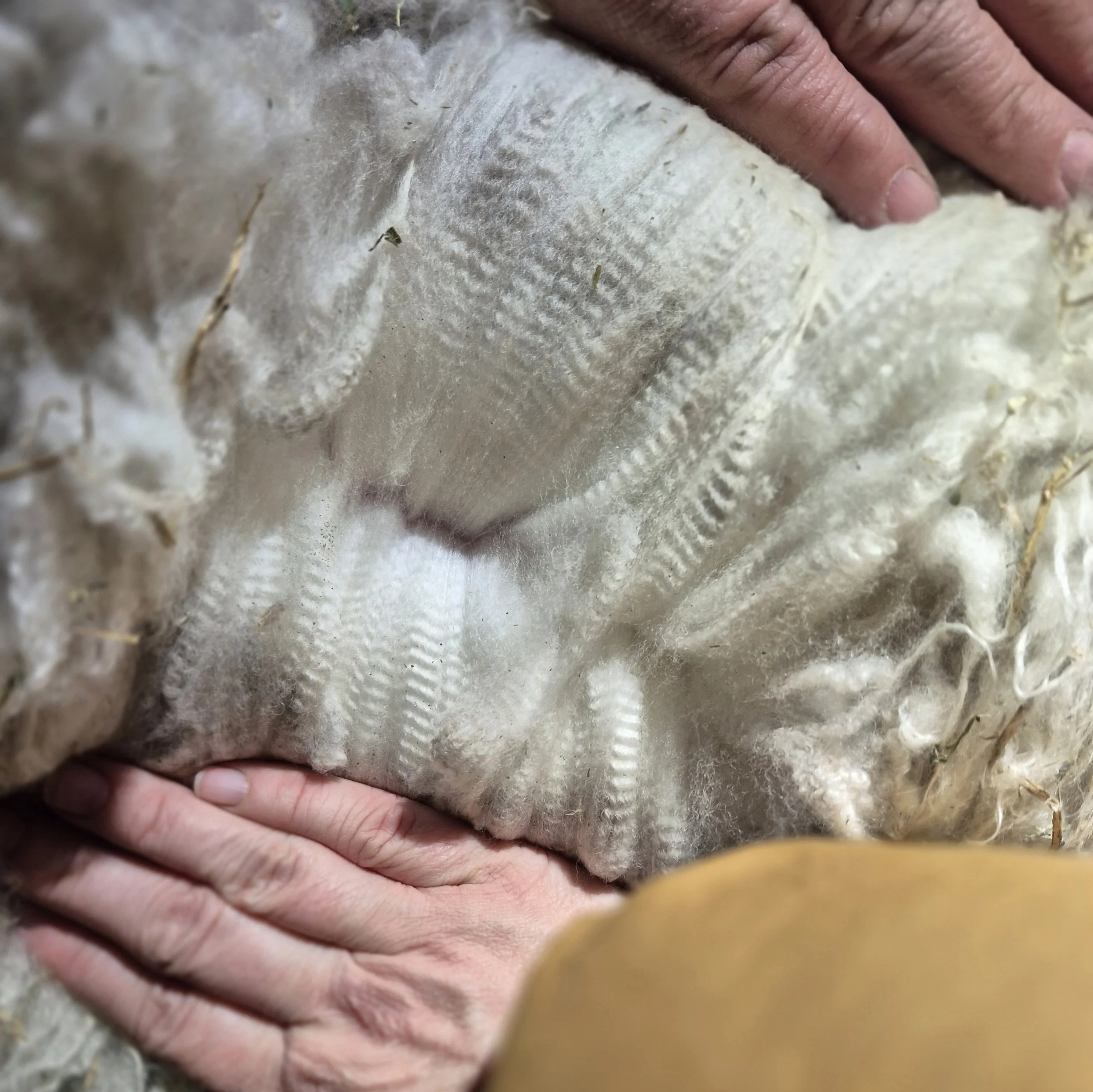
Huacaya fibre grows outward from the body in dense, fluffy locks with a natural wave or crimp. The animal has the familiar soft, teddy-bear-like appearance that many people associate with alpacas.
SURI
Suri alpacas are less common and are prized for a very different kind of fleece.
Instead of crimping outward, Suri fibre grows downward from the body in long, separate locks. The locks can form elegant waves, curls or ringlets and have a distinctive silky lustre.